Generational Differences
This exhibition traces the evolution of LGBTQIA+ history in St. Louis, highlighting the struggles of past generations and their fight for visibility and equality. A collection of grassroots efforts contrast sharply with today’s sense of community, increased access to sexual health resources, and the empowerment of youth, who can more openly claim their identities. These pivotal movements were often driven by the impact of social issues like community health, specifically the AIDS epidemic, and inclusion in the military. By exploring generational differences, these objects represent the resilience of the LGBTQIA+ community, progress they achieved, and the work still needed to ensure safety, dignity, and acceptance for all. These stories honor those who fought for visibility and inspire future generations to continue advancing justice and inclusion.
Pink Triangle Button Worn by Gregory Gerhart, 1980-90s
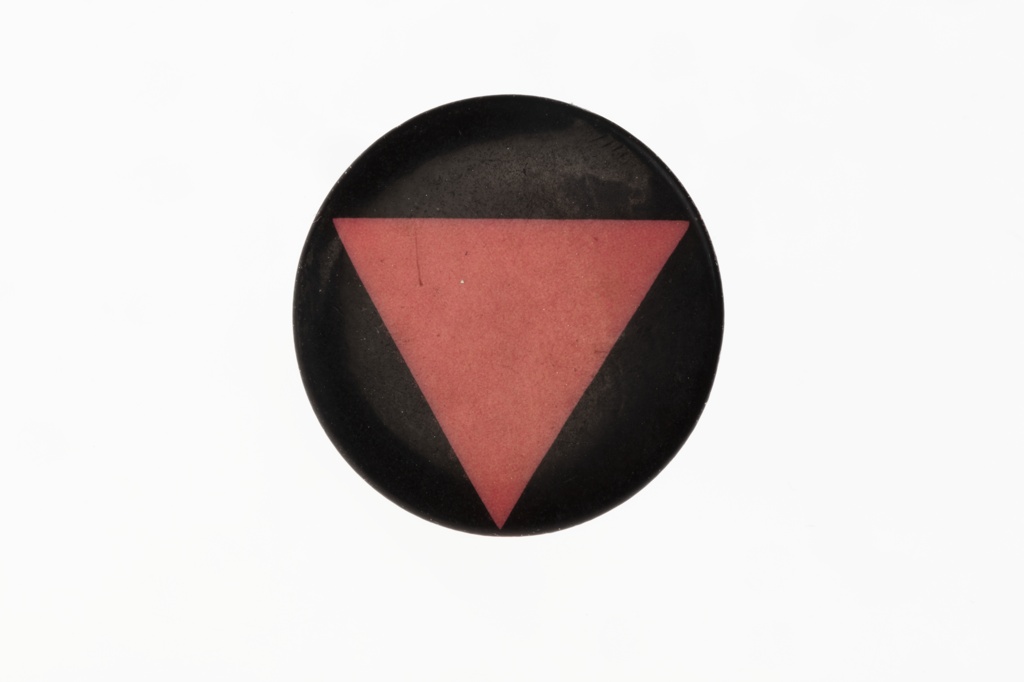
This symbol of gay pride worn by St. Louis activist Gregory Gerhart, features the insignia used during the Holocaust to identify homosexual prisoners within the concentration camp system. This insignia saw new life when in 1973, the American Psychological Association eliminated homosexuality as a type of mental illness. Formerly oppressed and persecuted individuals united together and fought for gay liberation and created the movement for visibility and acceptance throughout the 1980s and 1990s.
The Unknown Gay, 1980
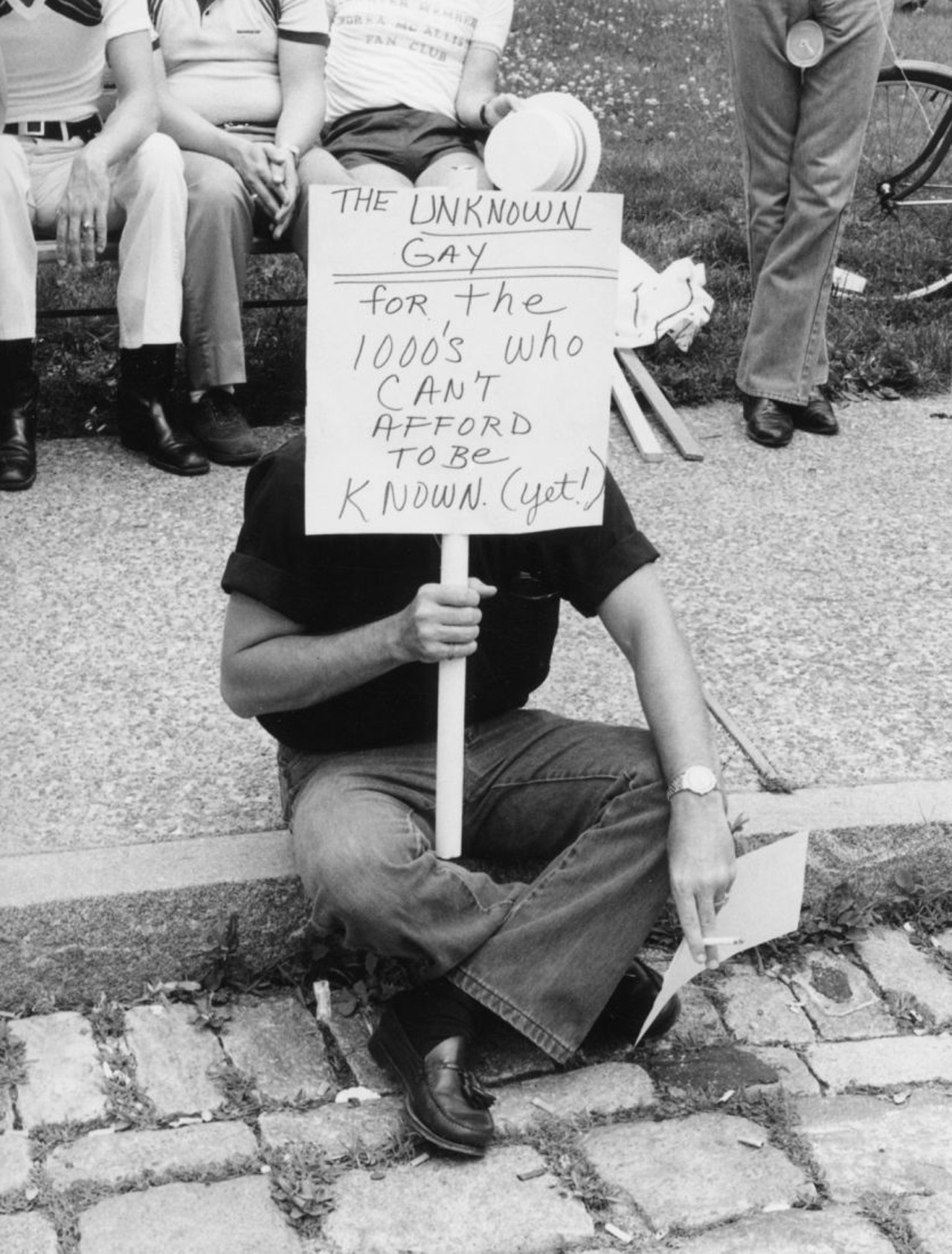
This powerful image, taken at an early Pride event in St. Louis, symbolizes the struggles of countless LGBTQIA+ individuals who faced societal pressures, discrimination, and fear. It stands as a poignant reminder of barriers overcome and a testament to resilience. By capturing the courage of those who risked their safety and well-being to fight for visibility and acceptance, this image honors their role in shaping a more equitable future for generations to come.
Parents & Friends of Lesbians & Gays (PFLAG), 1977
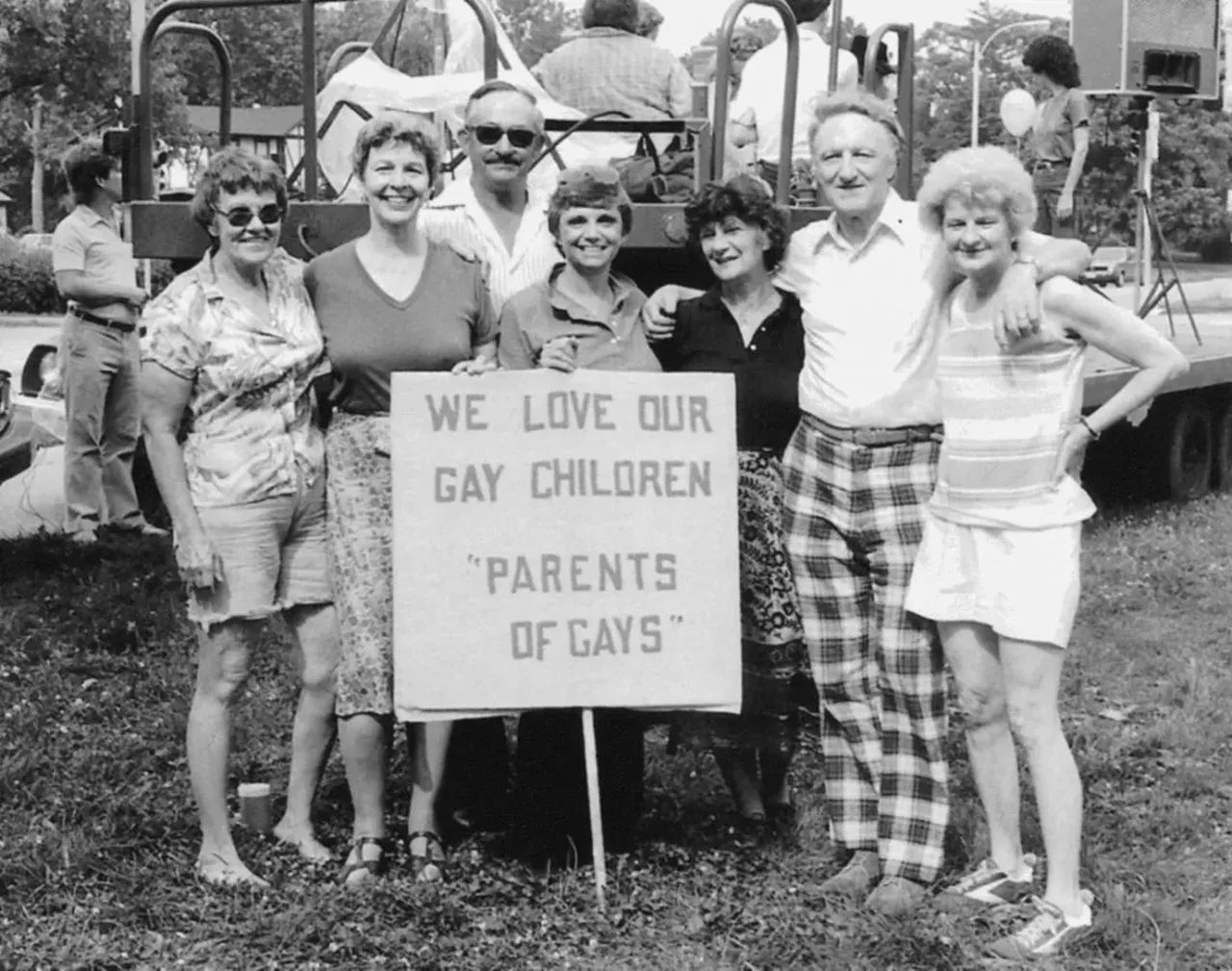
Since 1973, Parents & Friends of Lesbians & Gays (PFLAG) chapters have formed in countless communities to support their LGBTQIA+ loved ones. At a time when many families struggled with acceptance, PFLAG offered both compassion and understanding. Established in 1977, the St. Louis chapter stands as one of the oldest in the nation, its legacy captured here--reflecting decades of steadfast allyship and inclusion within St. Louis’ LGBTQIA+ history.
Trailblazers for Equality, 1980
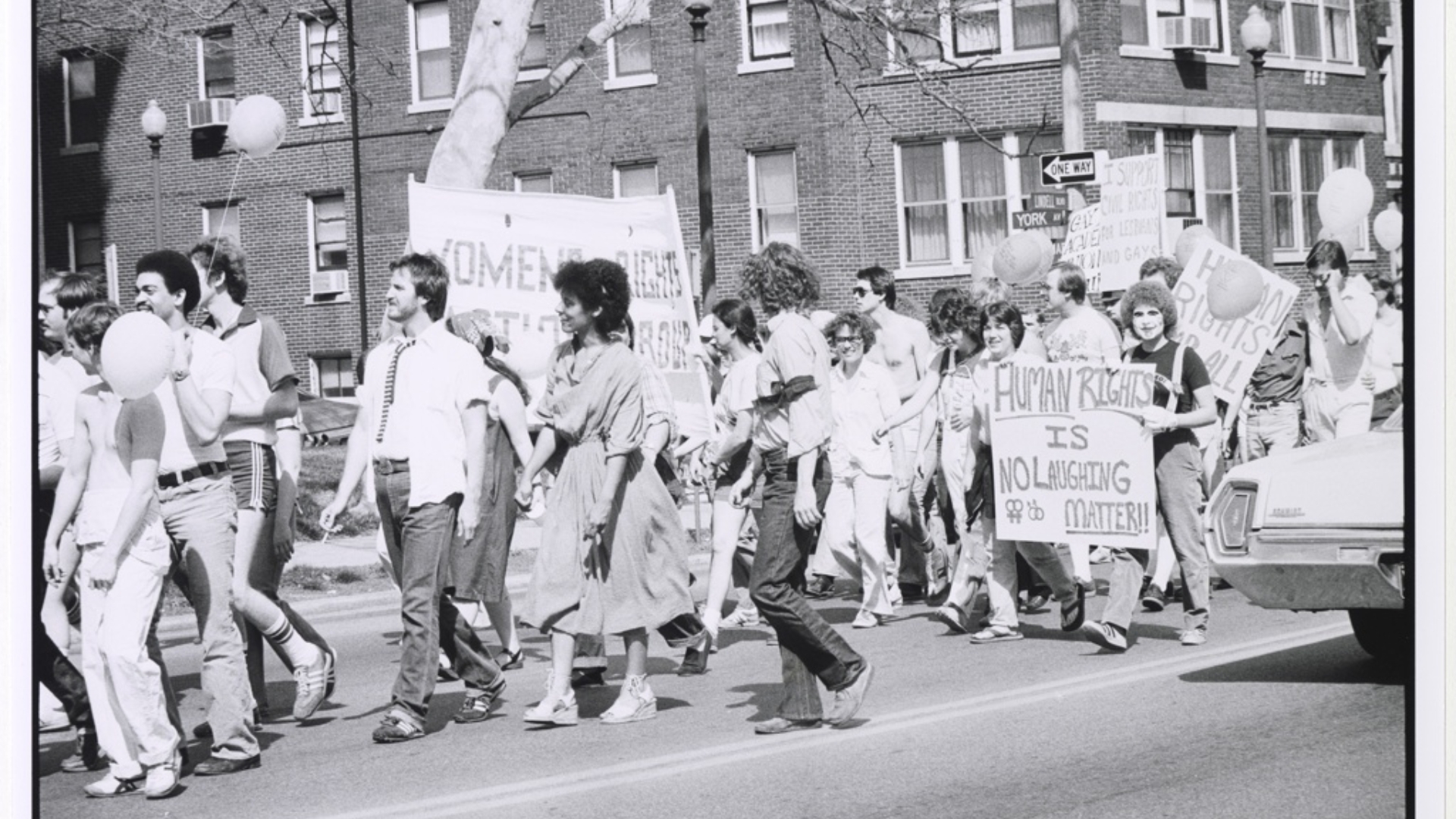
In 1980, participants in St. Louis’ first Gay and Lesbian Pride Parade boldly took to the streets in the Central West End neighborhood and near Washington University. In this event, people celebrated their identities and demanded equality. This historic event was a courageous act of visibility in a time when acceptance was far from guaranteed. Their efforts laid the foundation for the vibrant and resilient LGBTQIA+ community in St. Louis, inspiring future generations to continue the fight for equal rights.
Walking for Change, 1980
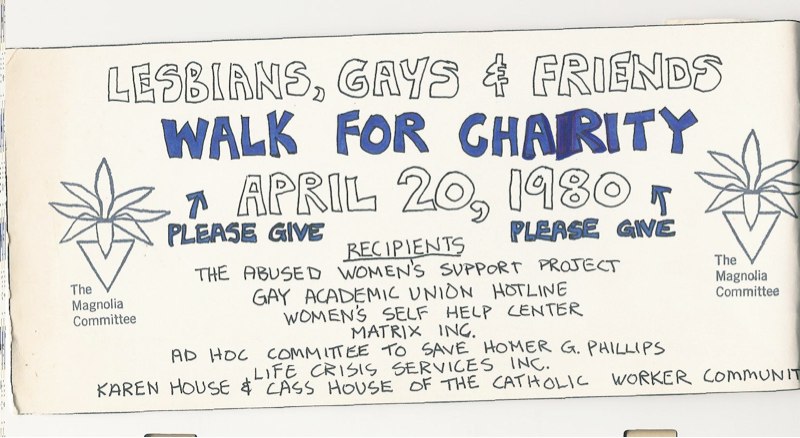
Formed in 1980, the Magnolia Committee united representatives from various St. Louis-area LGBTQIA+ organizations to advocate for visibility and equality. Their efforts led to the city’s first Lesbian and Gay Pride celebration, culminating in the Walk for Charity and rally on April 20, 1980. This poster, carried by a participant, has been preserved as a tangible piece of that history. Taking place in the Central West End near Washington University, the event was part of a week-long Pride celebration and marked St. Louis’ inaugural large-scale, publicly endorsed Pride gathering. Nearly a decade after New York City’s first Pride march, St. Louis’ commemoration demonstrated the growing visibility, unity, and determination of its LGBTQIA+ community.
Tower Grove Pride - Micro Oral History, September 29, 2024
Date: September 29, 2024
This interview with Sam, a member of the LGBTQIA+ community, reflects on the Tower Grove Pride Fest, highlighting its connection to early LGBTQIA+ gatherings as a less corporatized event. Sam recalls the 1980 Celebration of STL Lesbian and Gay Pride, an event which passed through the Central West End and Washington University, where participants were instructed to tell authorities they were "just walking." He emphasizes the importance of Pride for young people, sharing his own experience of feeling isolated as a youth.
Chant Sheet from St. Louis Pride Parade, 1989
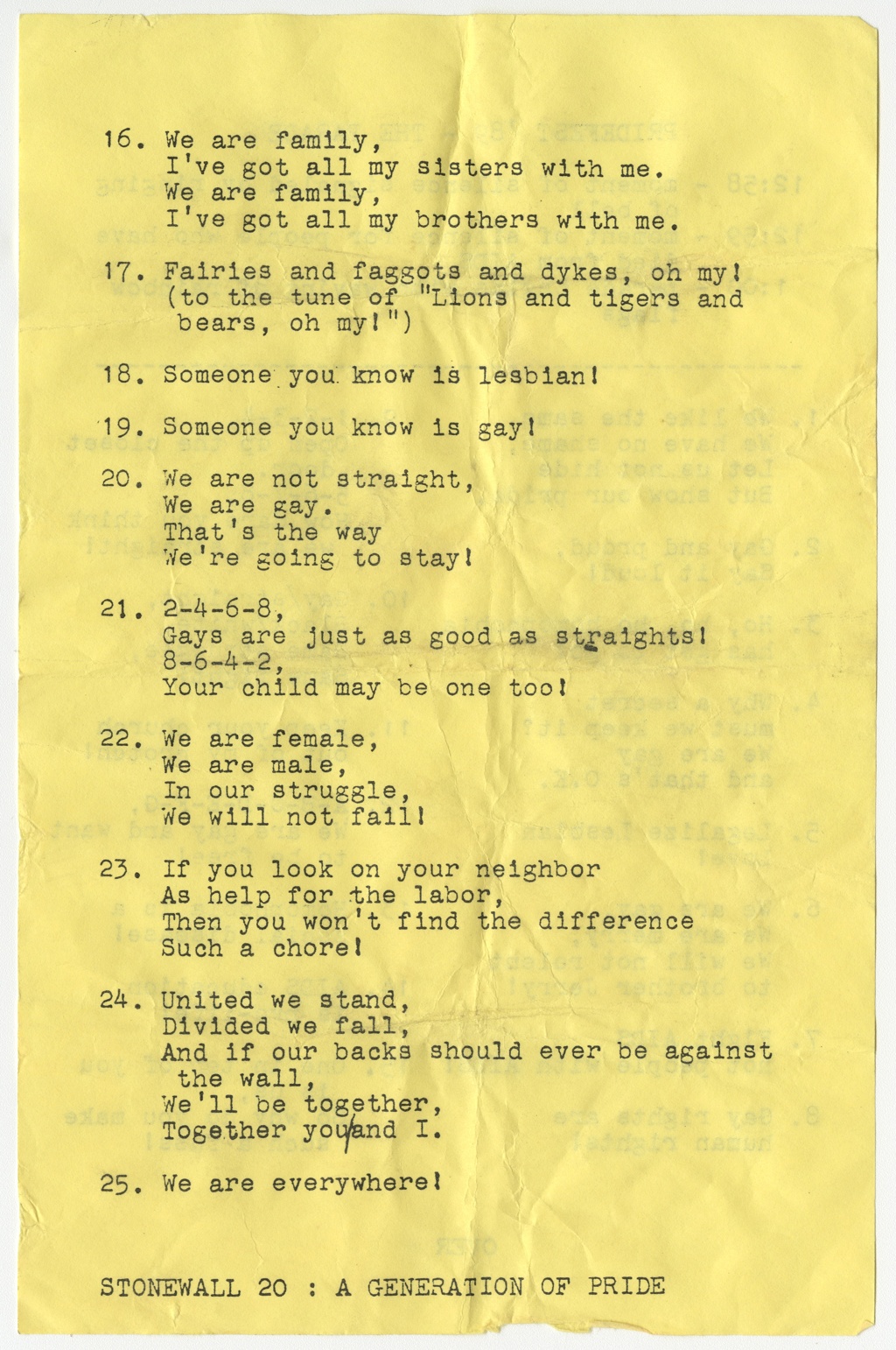
In 1989, Pride parades and events in St. Louis commemorated the 20-year anniversary of the "Stonewall Riots," the event that birthed the National Pride Movement. Titled "Stonewall 20: A Generation of Pride," the parade flyer's chants suggest the LGBTQIA+ community's concerns in 1989. Notable themes communicated through the chants include: the desire for unity, visibility the AIDS epidemic, and human rights.
Tower Grove Pride - Micro Oral History, September 28, 2024
Curtis reflects on changing levels of visibility for the LGBTQIA+ community over time. His memory of a 1985 pride event in Fayetteville, Arkansas juxtaposes with the police-free STL Pride event in 2024 to reveal increased levels of visibility in what Curtis calls a “community of humanity.” Current politics concern him since he remembers a time where visibility was not as accepted.
1999 St. Louis PrideFest Button
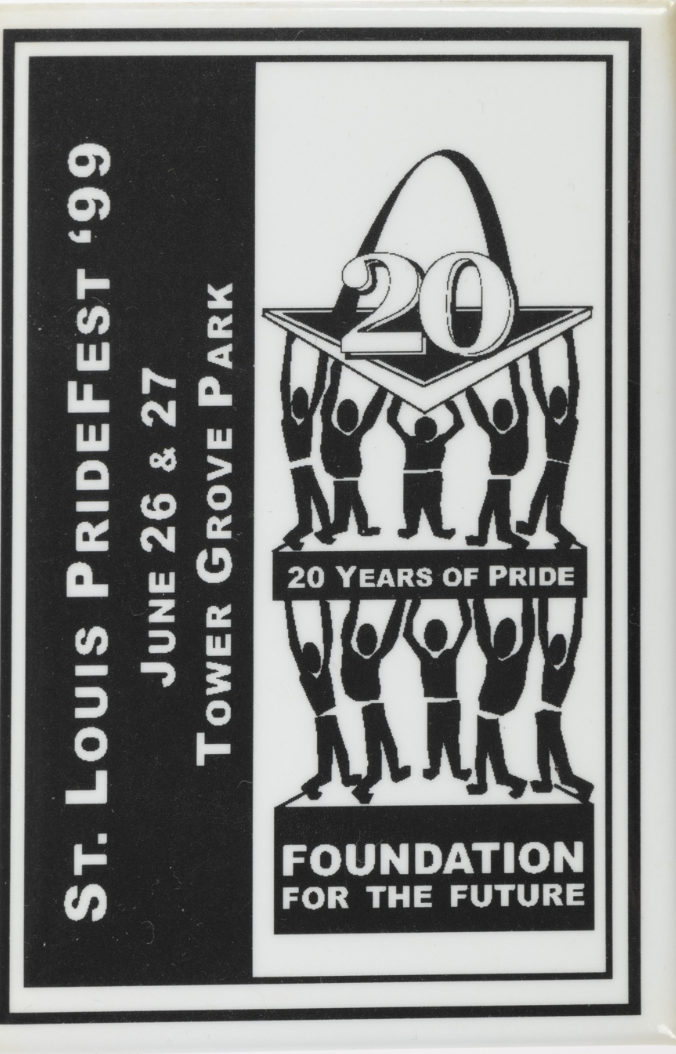
On June 26 and 27, 1999, St. Louis celebrated the 20th anniversary of PrideFest in St. Louis at Tower Grove Park. Although Washington University hosted the city’s first pride celebration in 1979—sparking an annual tradition—Tower Grove Pride did not begin hosting its own pride events until 1998. The 1999 PrideFest theme, “Foundation for the Future,” highlighted the importance of connecting past and present generations, reflecting the evolving legacy of the city’s LGBTQIA+ community.
Tower Grove Pride - Micro Oral History, September 29, 2024
In this interview, Melanie B., a U.S. Army veteran and St. Louis Tower Grove Pride attendee, reflects on shifts in LGBTQIA+ visibility and acceptance during her military career. Though she does not directly address “Don’t Ask, Don’t Tell”—the U.S. policy (1993–2011) that barred openly LGB individuals from serving—her memories recall an era of secrecy, when government regulations fostered a persistent fear of retaliation among LGBTQIA+ members of the military.
2015 PrideFest Poster

Poster for a June 2015 event sponsored by Boeing, “Honoring LGBT in the Military.” In 1993, the “Don’t Ask, Don’t Tell” policy went into effect, barring openly LGB individuals from serving. Eighteen years later, its repeal by Congress allowed gay, lesbian, and bisexual service members to serve openly, marking a major shift in military policy and culture.
2023 Planned Parenthood Sexual Health Kit Handout at St. Louis PrideFest
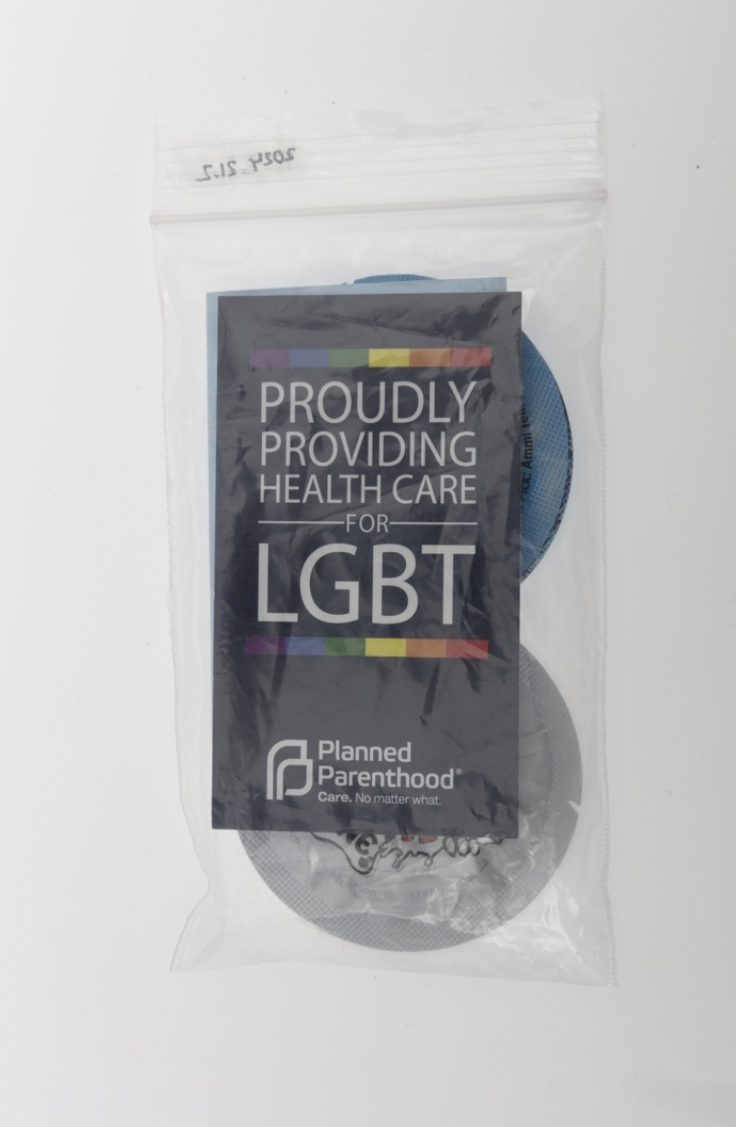
These kits were openly distributed at St. Louis’s Downtown PrideFest, reflecting attendees’ increasing familiarity with LGBTQIA+ sexual health. Historically, sexual health awareness has played a crucial role in the community’s resilience. Advances like these kits, along with broader medical innovations, have contributed to the near-elimination of new AIDS diagnoses and steady declines in HIV rates in recent years.
Magnolia Committee Banner, 2014
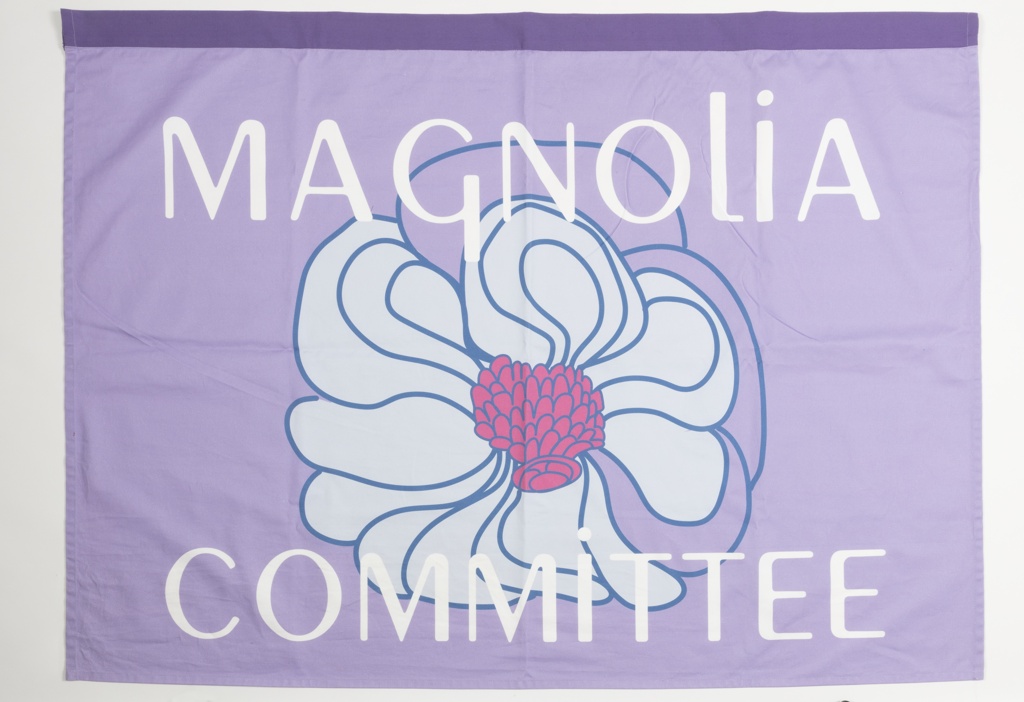
Formed in 1980, the Magnolia Committee united representatives from St. Louis area LGBTQIA+ organizations. These representatives collaborated and founded the city’s first publicly sanctioned Lesbian and Gay Pride celebration. Advocating for visibility and equality, they led efforts like the Walk for Charity. This banner, carried in the 2014 St. Louis Pride, honors their historic activism and collaboration, symbolizing the determination of St. Louis’ LGBTQIA+ community to claim space and fight for their rights with courage.
Rainbow St. Louis Flag with Signatures from 2012 Pride Fest
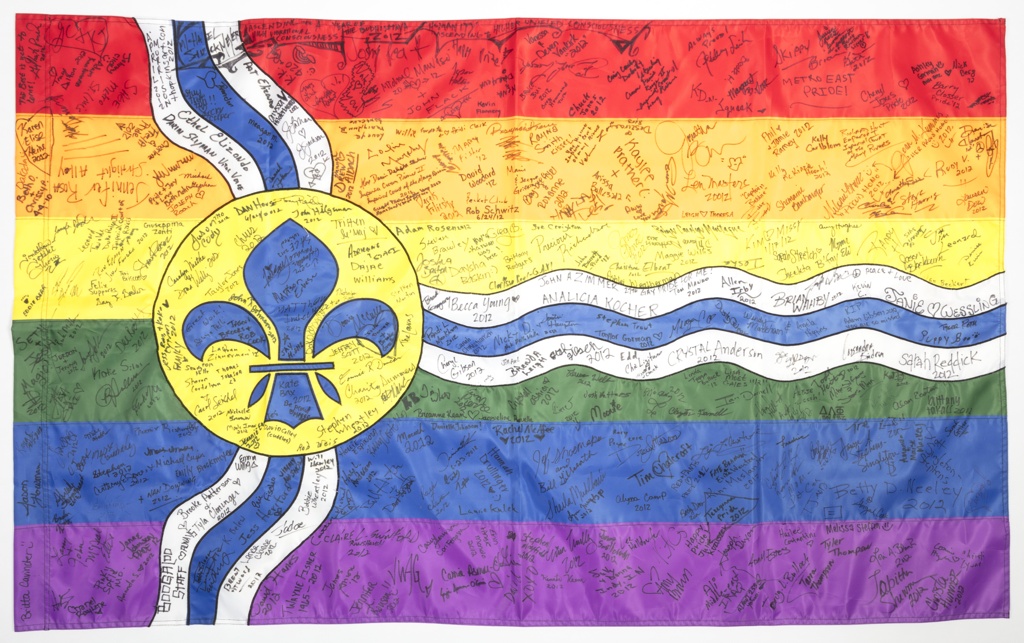
This Tower Grove PrideFest flag stands as a powerful testament to the transformative journey of St. Louis’s LGBTQIA+ community. In 1981, they struggled amidst forced invisibility. By 2012, they had proudly woven their identity into the very imagery of the city’s Fleur-de-lis and flag. Once unseen, they now stand boldly in the public eye, forging a legacy of inclusion that acknowledges their journey and helps guide future generations toward a more equitable world.