Lesson 2: Archives and Societal Changes
Main Ideas:
- Systemic issues are often deeply rooted in more than one aspect of society which makes achieving lasting societal change a long and difficult process.
- Archives can assist advocacy groups in their efforts to achieve societal change by providing invaluable historical information on the issues that are currently plaguing the United States including their origins and how others have fought against them in the past.
- Advocacy groups can use archives to alter a society's comprehensive culture to one that is more inclusive.
What to Know?:
In Lesson 1 we covered how archives can be a tool for self-recognition in the materials. This lesson will cover the complex issue of how societies change and how, more specifically, archives can play a role in assisting movements to achieve social change.
While in many respects social change suggests a change in policy or law that alters the way a society functions, that is only one aspect of it. Fundamentally, social change can be broken down into various forms or strategies depending on how you define a society. As there is seemingly no end to how a society can be defined and determined, this lesson will focus on three aspects of society to inform you on social change. These aspects are Public Policy, Comprehensive Culture, and Social Acceptability. Each of these aspects of a society are also incredibly intricate and complex in nature, as they largely depend on the perspective you view them from. In this lesson, you will be provided a general understanding of each of these aspects of society. This is not the only way to understand a society or overarching changes within one, but a targeted understanding that will allow us to explore how these changes are achieved.
Public Policy
Public policy is a hotly debated issue both in the political and sociological spheres. One of the most general understandings of public policy was presented by Thomas R. Dye, an American political science professor. Dye argued in his book Understanding Public Policy that public policy was "anything that a government chose to do or not to do." In other words, public policy was the actions of the ruling authority of a society. Laws, executive orders, and court rulings, are therefore all a part of public policy. It is important to also understand that public policy can and has been influenced by the particular cultural values and human interactions between the elected officials and the people who elect them. In the United States this is especially true, as the authority of the state and federal governments are ultimately subject to the will of the people that they govern. In order for lasting changes in public policy to occur, it is also necessary for the comprehensive culture and what is considered socially acceptable human interactions to both change as well.
Comprehensive Culture
Typically, a comprehensive culture is the accumulation of shared values, practices, or beliefs that are held by all members of a society. These “core values” often influence both public policy, social acceptability, and are often rooted in the hearts and minds of a society’s individual members. The United States of America, seen as a sort of cultural melting pot with many different ideas and cultures, can often feel like an exception to this more broad understanding of cultural cohesion. However, the core values of the United States can seem to stem from the phrase “Life, Liberty, and the Pursuit of Happiness” found in the Declaration of Independence. These values can be seen as the “core” of what would later be the many nationalistic values held by the American public and espoused by many public officials. However, not having a strict definition for these values is also what has allowed for the continuation of systemic injustice, abuse, inequality, and even fascist policies. An example of this could be seen during the Red Scare, when anything deemed to be left-leaning was immediately labeled a communist and determined to be a threat to the American way of life.
When a society’s core value system is left too vague or broad, it can often lead to misuse as people in power impose their own understanding of those values onto all other members of society. These values can become exclusive as they are only for “true members of the society”. Which can be used to further influence the hearts and minds of a society’s populace by creating ideological divisions on the grounds of “protecting the core values”. So, in order to prevent this ongoing problem these values must be further defined to prevent misuse: as life, liberty and the pursuit of happiness for all people no matter their race or creed. This is a more inclusive understanding of America’s core values and therefore must be perpetuated on every level of society until it is held by every member of that society.
Social Acceptability
Every society on every level has different forms of human interactivity that is determined to be socially acceptable. These often become "social norms" or "soft regulations" that are not always enforced by the law, but are instead enforced by members of the society. A smaller example of one of these social norms would be table manners, where in some households it is considered rude to eat with your elbows on the table. A break from this "social acceptability" also carries with it social consequences. However, while not all forms of socially acceptable interactions there are circumstances in which they are, such as disturbing the peace or indecent exposure which both have legal consequences in addition to social. This structure is also the most vulnerable to abuse or misuse. As differences or lack of understanding between different types of interactions can and historically has led to the oppression of individuals based on race, cultural, ethnicity, and class. Societal norms are more often than not used as a tool of inequality rather than equality. And they are often used to govern human interactions between members of a society.
Human interactions within a society range vary based on the people interacting with one another. For instance, the interactions between a member of the general public and a public official would be very different than two members of the general public. Additionally, how members of the society interact with the society at large also influences the avenues of change that can be utilized by the general public. An example of this larger-scale interaction would be peaceful protest utilized by many advocacy groups to put pressure on governing authorities to change public policy. Human interaction is the primary method of change for comprehensive culture, public policy, and social norms while at the same time being constricted by these other aspects.
Now that we have gone over a general understanding of how these aspects interact with one another. Let's go over how each plays a role in transformative societal change and how that change may be brought about.
Transformative Social Change
In order for transformative social change to occur in society the comprehensive culture, public policy, and societal acceptability, must all be altered to embrace, affirm, and enforce these changes on every level of society. As this lesson has already been discussed in some length, legislature is not the only change necessary to solve ongoing system inequalities. If this were the case, the Civil Rights Act of 1964 would have all but eradicated systemic racism and prejudice based on race not long after its passing. While it did prevent these prejudices from occuring in a legal standpoint, it did not encourage a change in the racist cultural influences or the minds of those brought up in racist environments. That is one of reasons why racism has survived and why many members of the non-White community to this day experience prejudice through racial profiling, restrictive covenants, and even general interaction. So in order for true transformative change to occur, efforts must be put into changing the hearts and minds of all members of a society to ensure that on every level, from its public policy to its core values, are in support of and enforcing inclusion and equality. But how does one go about creating these changes? There are many ways that this question can be answered, some would say personal advocacy and group organization to place pressure on public officials. Another answer would be to educate the people to change people’s attitudes and in turn, creating a more inclusive society. Regardless of the approaches taken, it is crucial activists work on all levels to ensure that change happens thoroughly and completely.
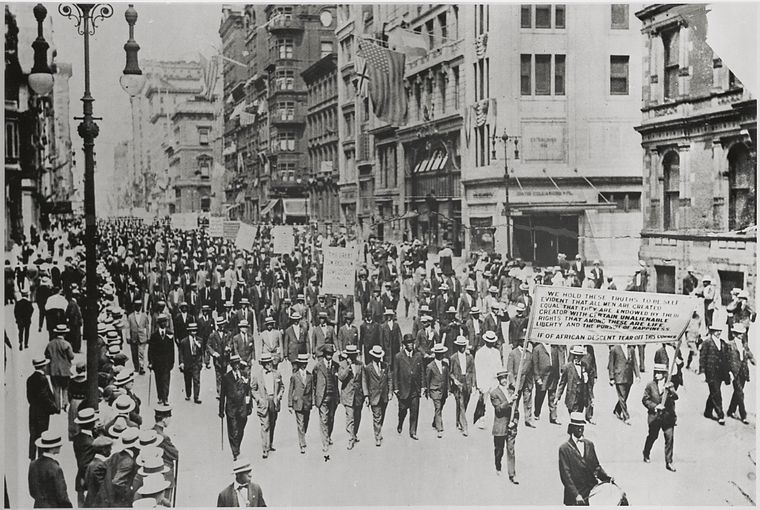
The process of social change is often a long and difficult one, but it always begins with members of the community working together to advocate for what they believe is right. Protests, rallies, and other forms of civil dissent are only a part of how social change is achieved. Forming organized groups allows movements to further expand their message beyond the local level and increase their number of supporters. This in turn also increases their ability to influence larger social messages in both small and large ways. Presenting a unified front is crucial to the success of any movement attempting to enact social change. Archives can assist with the fostering of this unity by providing historical narratives that can bring the community together. Personal advocacy is also another important aspect of achieving social change by becoming voices for movements. The opportunities for self-education offered by conducting archival research provides evidence and historical context that can make personal advocacy more effective.
Activities: Encouraging Conversation
- In this lesson we took a closer look at how transformative change in society is achieved and how archives can be used to support movements working towards that goal. Having learned how nuanced achieving social change can be, what are some strategies that advocacy groups can employ to better combat the many challenges they can face?
- Archives can serve as an excellent resource for activists and advocacy groups. Above we discussed some of the ways that archives can be utilized. Can you think of any other potential ways they can be used?
Want to Know More?:
“Gleeson Library: Politics: Social Movements.” University of San Francisco Gleeson Library | Geschke Center. Accessed April 25, 2025. https://library.usfca.edu/politicsguide/socialmovements. Social Movements - Politics - Gleeson Library at University of San Francisco
Dunfey, Theo Spanos. “What Is Social Change and Why Should We Care?” Southern New Hampshire University. Aug 14, 2023. Accessed April 25, 2025. https://www.snhu.edu/about-us/newsroom/social-sciences/what-is-social-change. What is Social Change and Why Should We Care? | SNHU
“Archival Activism: Reshaping Narratives for Social Justice.” A Seat at the Library, 29 Apr. 2024, aseatatthelibrary.wordpress.com/2024/04/29/archival-activism-reshaping-narratives-for-social-justice/. Archival Activism: Reshaping Narratives for Social Justice – A Seat at the Library
“A (New) Manual of Archive Administration.” Archival activism - A (New) Manual of Archive Administration. Accessed April 25, 2025. http://archivesmanual.wikidot.com/archival-activism.Archival activism - A (New) Manual of Archive Administration