Lesson 1: History of the Organization for Black Struggle
Main Ideas:
-
The Organization for Black Struggle is a grassroots organization that was found in a very turbulent time for Civil Rights organizations.
-
The Organization for Black Struggle has worked tirelessly since its founding to stand against systemic injustice and create opportunities for those neglected by the system.
What to Know:
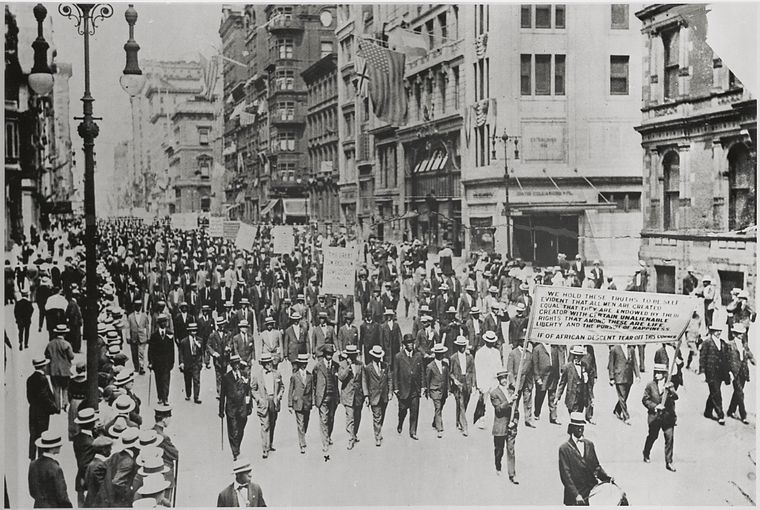
The Organization for Black Struggle (OBS) was founded in 1980 to address a variety of needs of the African American working class. These organizers included a range of seasoned activists and union organizers, as well as students and members of the African American community in St. Louis, Missouri. In order to understand how the Organization of Black Struggle came to be with the current methods and practices it employs today, it is important to understand the challenging times that Civil Rights organizations faced in the late 1950s up to the early 1970s. Before the Organization of Black Struggle, there were many Civil Rights activists and organizations operating both in St. Louis and the country at large from the late 1950s up until the 1970s.
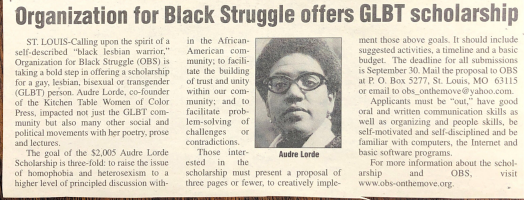
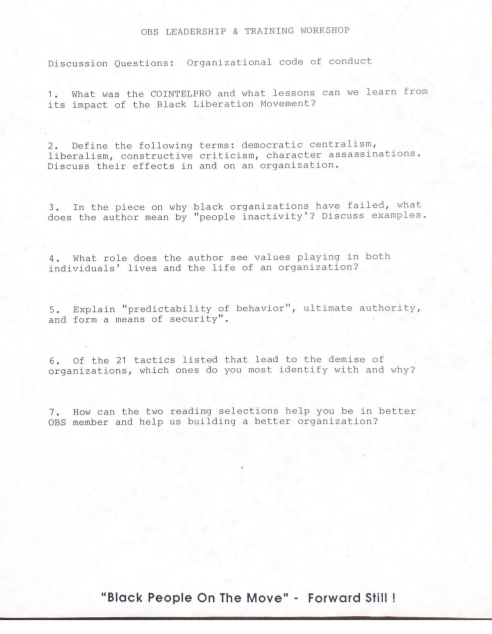
The Organization for Black Struggle or OBS was built upon four pillars that would serve as their primary focus of their work: workers’, women, and youth rights, and dismantling the prison industrial complex (police violence and court corruption included). In order to ensure a solid foundation for the organization, OBS looked to past organizations in order to learn from them and establish best practices. The Black Nationalist Party, the Congress of Afrikan People, and the Action Committee to Improve Opportunities for Negroes were all formerly active local groups that OBS learned from when constructing their own foundation.
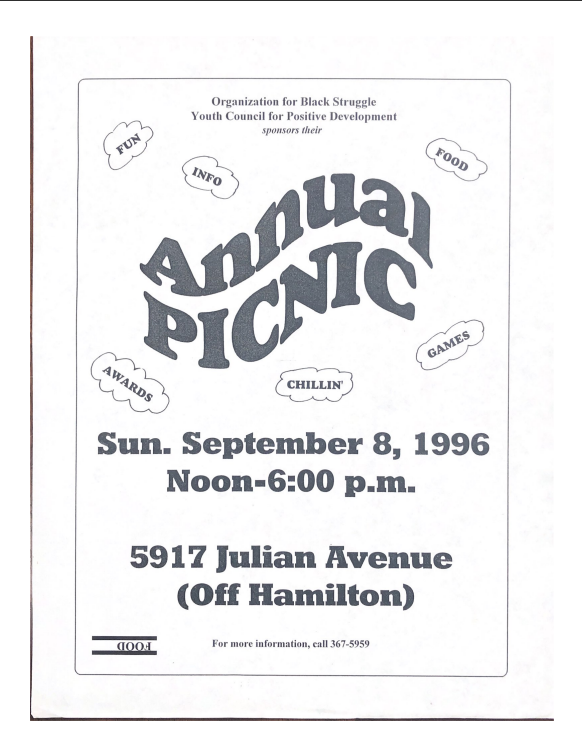
In addition to their influences, OBS has been involved in many other organizations working towards similar goals. One such organization was the Coalition Against Police Crime and Repression, or CAPCR. In 1983, after the murder of Marilyn Banks, CAPCR and OBS worked towards justice for her family. Rallies and protests were not the only way OBS organized in defense of African American rights; they also held retreats, workshops, conferences, protests, and many other programs or initiatives for the community to get involved. Even today, the Organization for Black Struggle remains active and continues to fight against systemic racism and oppression on local, national, and international levels.
Want to Learn More?
Here is a link to the Organization for Black Struggle's official website:
“About OBS.” Organization for Black Struggle. Accessed February 21, 2025. https://obs-stl.org/about-obs/.
Activities/Reflection:
What were the four pillars that served as the foundation for the Organization for Black Struggle?
What was the unique approach that the Organization of Black Struggle used to ensure that it had a solid foundation to build off of?