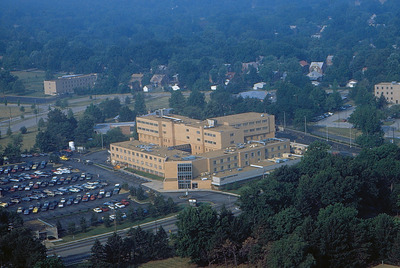
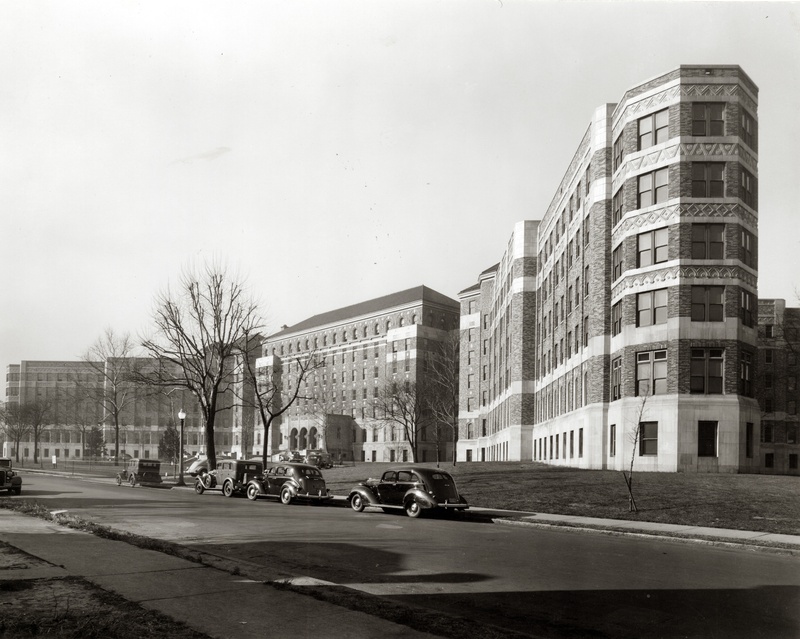
Built in Normandy, Missouri in 1952, the Normandy Osteopathic Hospital provided healthcare service and was a gathering place in the community for almost 50 years. The hospital opened with 50 beds in one wing and grew to accommodate 190 beds. It was a full-service hospital with an emergency room, inpatient care, pediatrics, internal medicine, geriatrics, obstetrics, and delivery rooms. At its peak, it housed a staff of 75 doctors, 25 externs, and 25 interns.
The Normandy Osteopathic Hospital served as an anchor institution in Normandy and the surrounding area. Normandy and the surrounding suburban region had become a predominately Black community by the time of the hospital’s closure in 2000. The closure of the hospital affected the community’s economic development, access to healthcare, access to medical training opportunities, and access to community spaces, ultimately impacting the life expectancies and health outcomes of community residents.
Homer G. Phillips was an influential lawyer and civil rights activist from Sedalia, Missouri. He attended Howard University Law School in Washington, DC, and later established a successful law practice in St. Louis.
In 1919, Phillips co-founded the Civil Liberties League, an African American political organization representing Black interests in the Progressive wing of the Republican party. In the early 1920s, he co-founded the St. Louis Negro Bar Association, later known as the Mound City Bar Association. He defended many African Americans in criminal cases following the 1917 race riots in East St. Louis, and in 1922, Phillips led the demand for a hospital for the Black community. His efforts led to the construction of Homer G. Phillips Hospital and School for Nursing, which opened several years after his death. The hospital served Black residents and trained Black medical professionals until the early 1980s.
When the City of St. Louis enacted a segregation ordinance in 1916, Phillips and the local branch of the NAACP filed for a temporary injunction on the ordinance. US District Judge David Dyer granted the injunction until Buchanan v. Warley could be the US Supreme Court. The Buchanan v. Warley decision set the precedent that ordinances that prohibited the sale or purchase of properties by Blacks in white-majority neighborhoods violated Fourteenth Amendment protections.
Phillips was attacked and killed by several men with guns while waiting for a streetcar on June 18, 1931. The motive behind his assassination remains unknown.
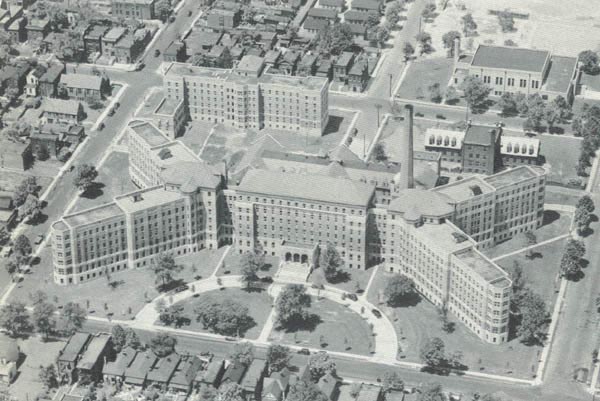
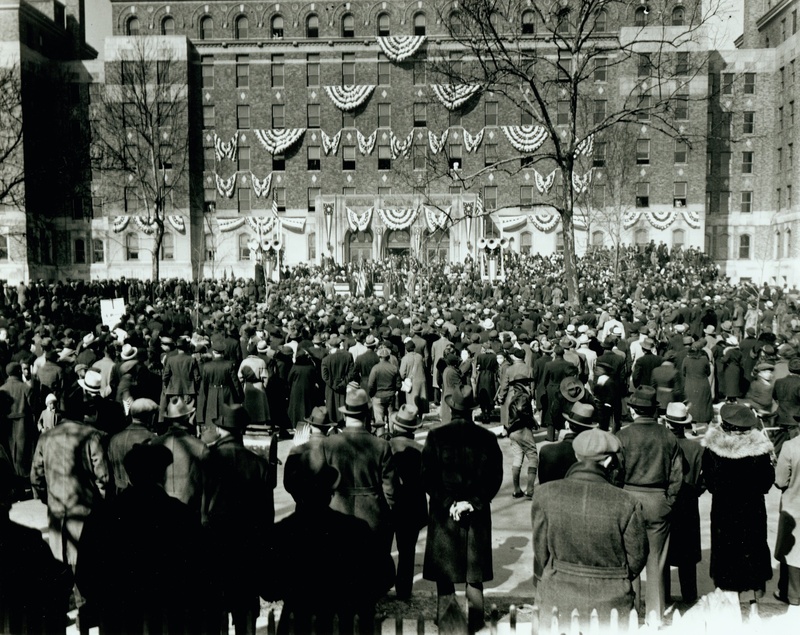
Homer G. Phillips Hospital and School of Nursing was a historic institution in St. Louis that served the African American community from 1937 to 1979. It was a fully equipped hospital and training facility for Black doctors, nurses, and other medical professionals during a time when opportunities for African Americans in these fields were limited. The hospital, named after the lawyer who championed its creation, was a vital part of the Ville neighborhood and a source of pride for the Black community.
Restored sections of the former hospital now serves as a neighborhood health care center and a residential care facility for older adults.
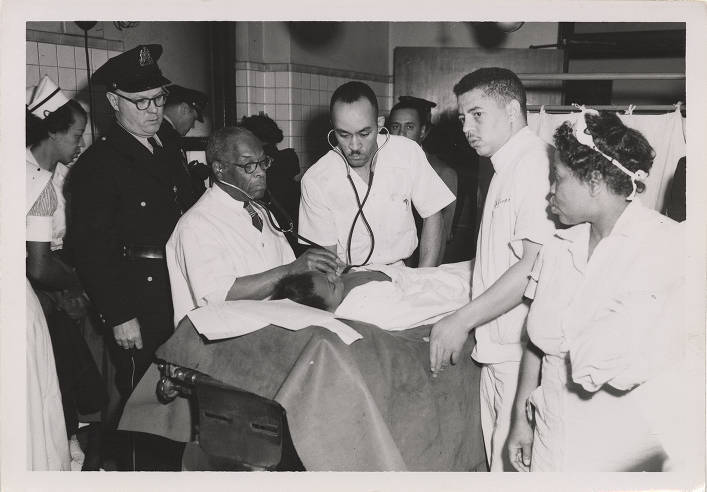
Homer G. Phillips Hospital Emergency Room. Dr. R. C. Haskell on left with glasses. Haksell was the first manager of the City Hospital No. 2 before Homer G. Phillips opened.
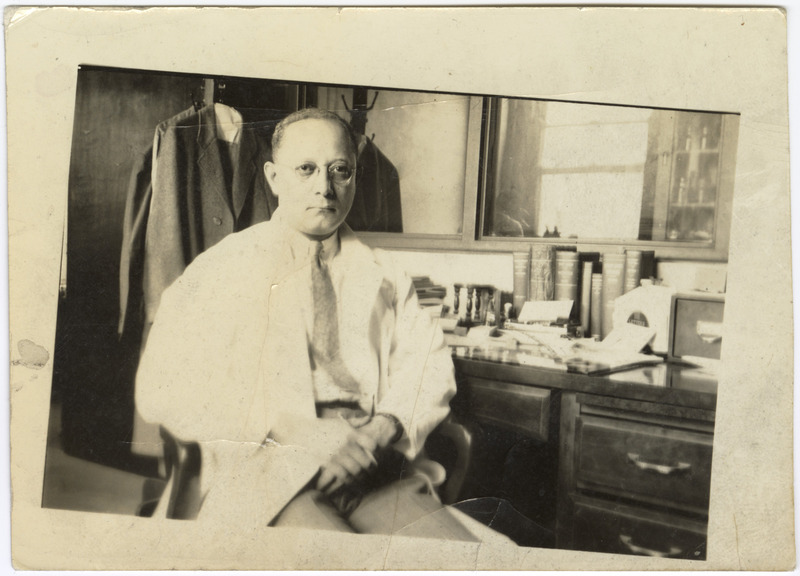
Horizontal, black and white portrait showing an African American man wearing a lab coat and sitting at a desk. A variety of books and papers cover the top of the desk.
Dr. J. Owen Blache (1900-1964) attended medical school at Howard University and, following an internship, was trained as a pathologist at Homer G. Phillips Hospital. After a stint in the army from 1942-45, he returned to Homer G. Phillips where he was made Director of Pathology, a position he held for the rest of his career.
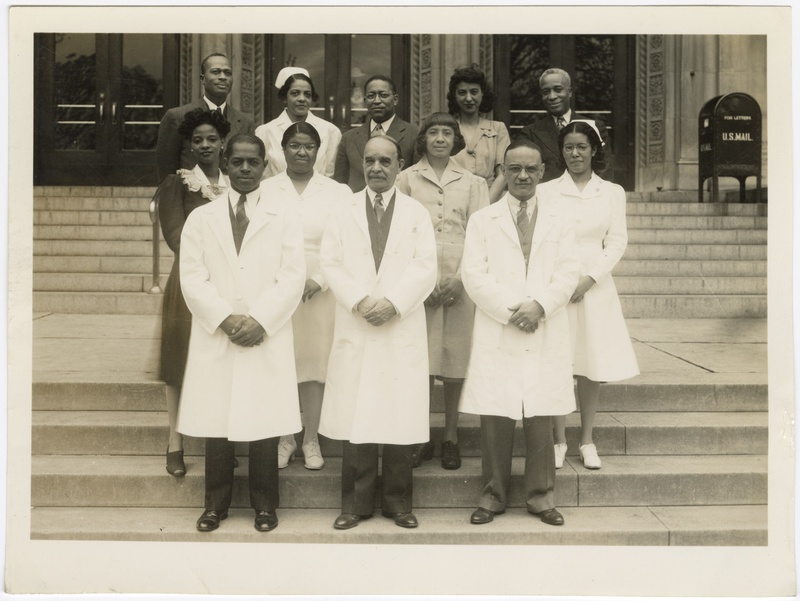
Horizontal, black and white group portrait showing doctors, nurses, and other staff at Homer G. Phillips Hospital. The group of African Americans is posed on the steps of a grand building, presumably the steps of the hospital. Several of the men are wearing lab coats, and several of the women are wearing nurse's uniforms.
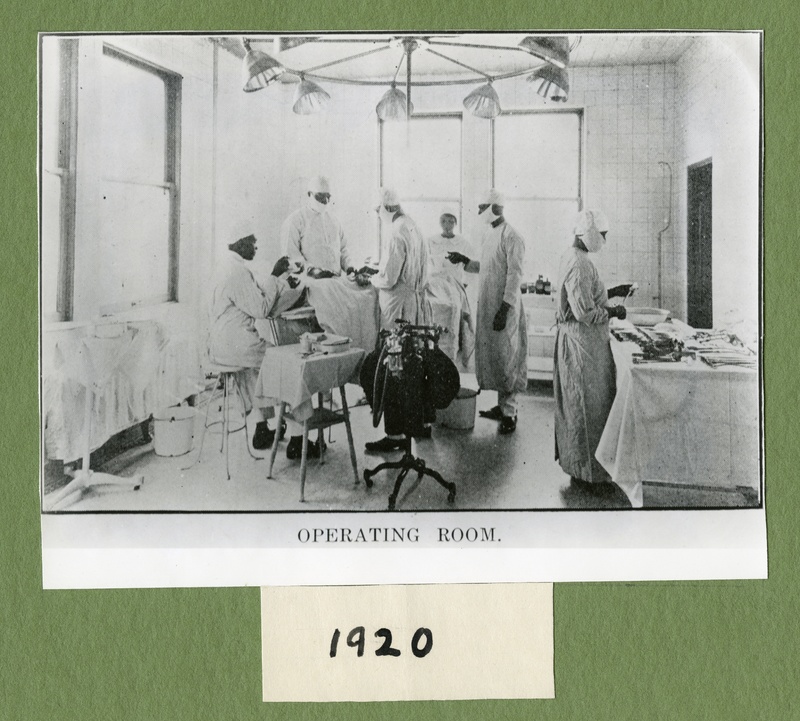
Horizontal, black and white photograph showing African American doctors in an operating room, probably at City Hospital #2. A group of surgeons are gathered around a patient lying on a table in the center of the image, while another doctor or nurse is cleaning or preparing equipment at a table on the right. Large lights hang from the ceiling.
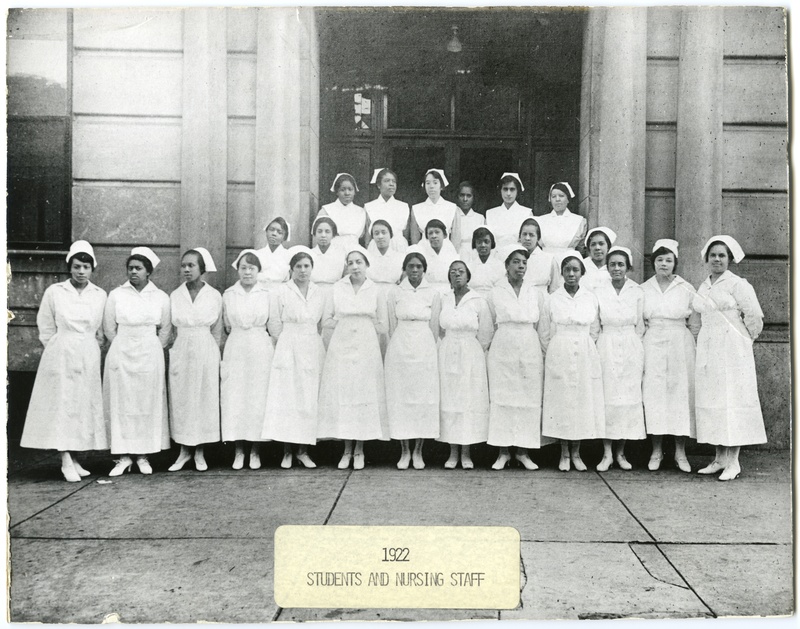
Horizontal, black and white photograph showing a group portrait of African American nursing students and nursing staff wearing their uniforms, probably at City Hospital #2. The group is posed in three rows in front of the entrance to a large stone building.
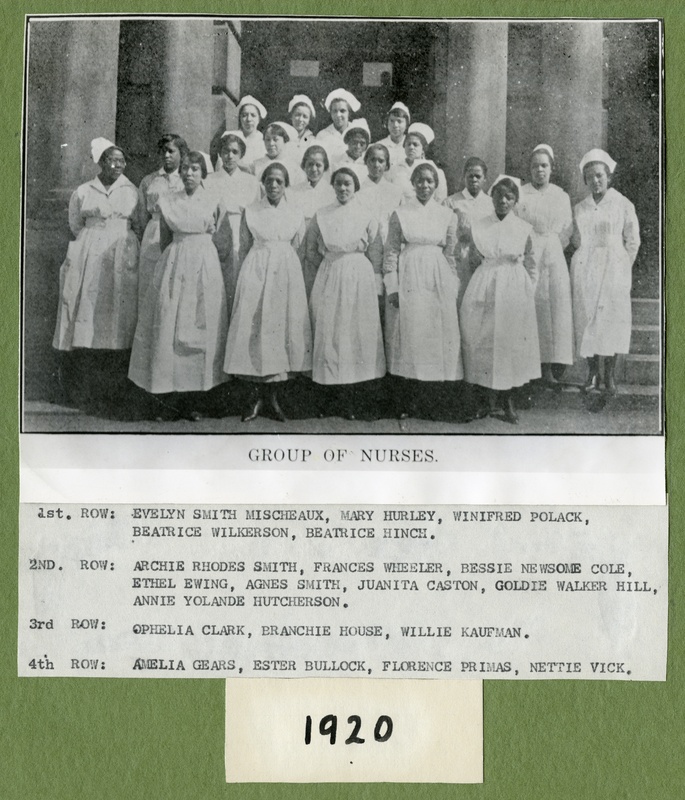
Horizontal, black and white photograph showing four rows of African American nurses posed on the steps of an unidentified building. The women are wearing their nursing uniforms. The women are identified below the photograph: "1st Row: Evelyn Smith Mischeaux, Mary Hurley, Winifred Polack, Beatrice Wilkerson, Beatrice Hinch. / 2nd Row: Archie Rhodes Smith, Frances Wheeler, Bessie Newsome Cole, Ethel Ewing, Agnes Smith, Juanita Caston, Goldie Walker Hill, Annie Yolande Hutcherson / 3rd Row: Ophelia Clark, Branchie House, Willie Kaufman. / 4th Row: Amelia Gears, Ester Bullock, Florence Primas, Nettie Vick."
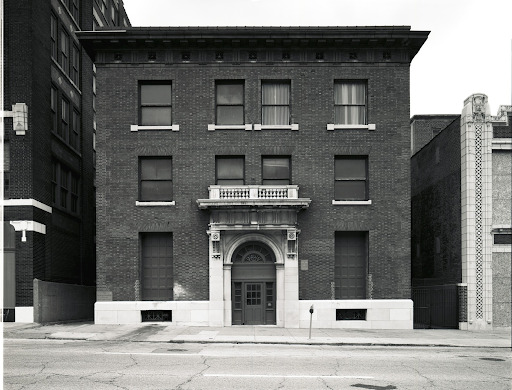
People’s Hospital. 2221 Locust Street. 1993.
Located at 2221 Locust Street, the People’s Hospital was one of the primary healthcare facilities for African Americans and other people of color in St. Louis before the Civil Rights Act. Run by an interracial board of directors (an extremely uncommon occurance at the time), the hospital serviced the people of Mill Creek Valley following its opening in 1903. While the building remains intact at its original location, the People’s Hospital has been abandoned for years.
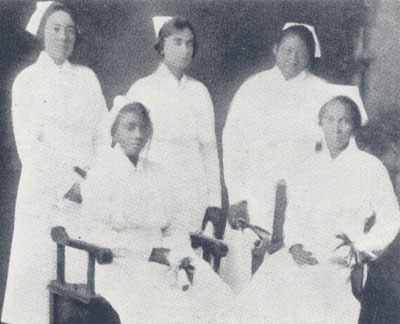
Not only were the hospitals in Mill Creek Valley dedicated to providing services to the African American community but they strived to advance education and employment opportunities for women of color. The image portrayed here depicts the first nurse graduates from City Hospital #2 in the year 1919. Over the next forty-nine years, the hospital saw a number of graduates walk through their doors, it wasn’t until 1940 that they finally witnessed the hospital’s first African American superintendent of nurses.
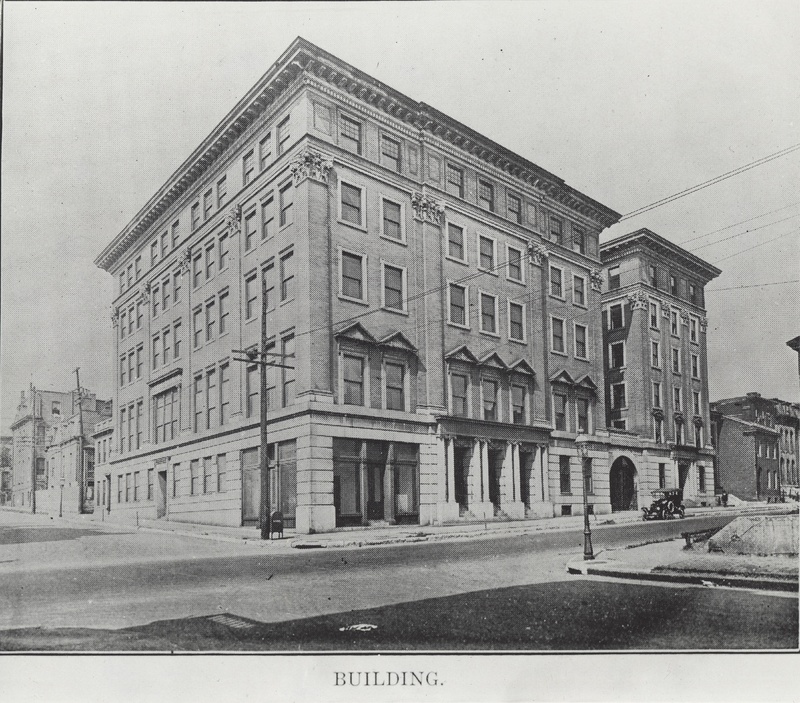
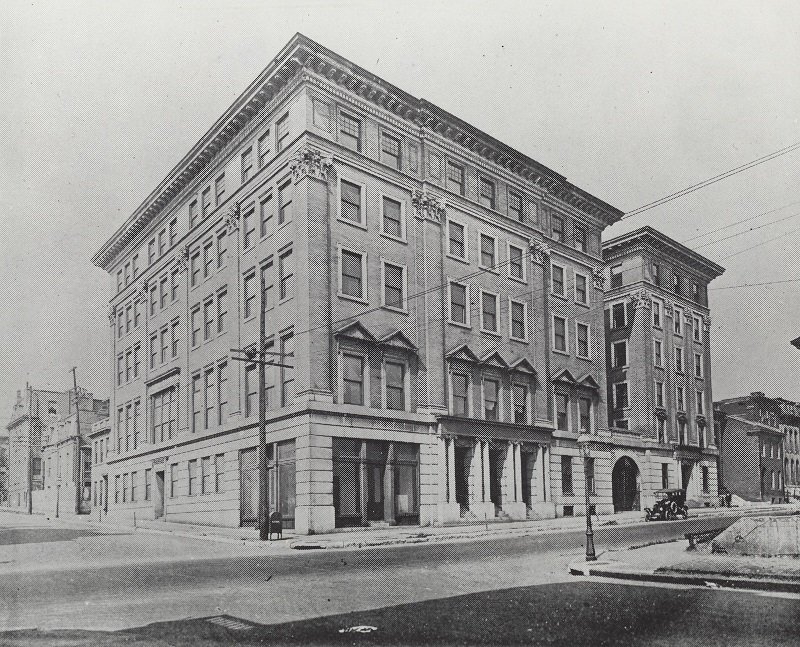
City Hospital #2 was built in 1919 in response to segregation and the lack of healthcare available to African Americans in the St. Louis area. It was one of only three hospitals that provided care to colored citizens at the time. In 1937, it was then renamed to The Homer G. Phillips Hospital and was one of the largest, exclusively black institutions in the United States until it desegregated in 1954.