People of St. Louis
- Title
- People of St. Louis
- Description
- This collection holds items related to the people and places of community within St. Louis and the surrounding area.
- Subject
- St. Louis History
- Black and African American History
- Mill Creek Valley Neighborhood History
- Black St. Louis History and Experience
- Sumner High School
- Historic Black Schools
- African American Students
- Activism
- Community Leader
- Remembrance
- Memory
- Homer G. Phillips
- Grace Bumbry
- Alice Windom
- Percy Green
- Bobby Norfolk
- Dr. Rosalind “Roz” Norman
- Charleton Tandy
- Judge Nathan B. Young
- Pearl Maddox
- Dred Scott
- Clarence T. Hunter
- Dr. Tom Dooley
- Bob Wilkinson
- Civil Rights Activist
- Black Progressive Republican Political Figure
- St. Louis Negro Bar Association
- Donny Hathaway
- Dr. Ruth Harris
- Frankie Muse Freeman
- The Mary Meachum Freedom Crossing
- Harvey J. Simms
- Charlotte Wilson Smith
- Brenda Williams
- Pearlie I. Evans
- Doris Gregory Black
- Judge Leah Brock McCartney
- Dr. Lucille A. McClelland
- Bertha Mason
- Florence Aritha Spotts
- Wyvetter H. Younge
- Rita Montgomery
- Gwen B. Giles
- Nettie Cunningham
- Peggy Thompson Hardge
- Lola Wallace Harris
- Betty Lee
- DeVerne Lee Calloway
- Merdean Fielding
- George L. Vaughn
- John Elroy Sanford
- Red Foxx
- Josephine Baker
- John William “Blind” Boone
- Lucy Anne Delaney
Items
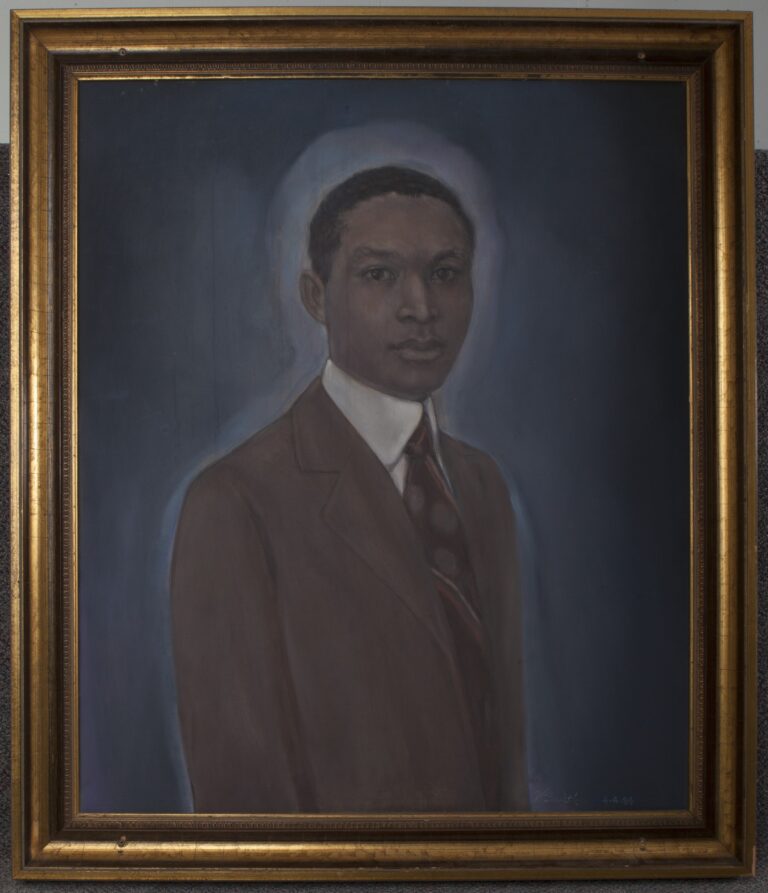
Homer G. Phillips
Homer G. Phillips was an influential lawyer and civil rights activist from Sedalia, Missouri. He attended Howard University Law School in Washington, DC, and later established a successful law practice in St. Louis.
In 1919, Phillips co-founded the Civil Liberties League, an African American political organization representing Black interests in the Progressive wing of the Republican party. In the early 1920s, he co-founded the St. Louis Negro Bar Association, later known as the Mound City Bar Association. He defended many African Americans in criminal cases following the 1917 race riots in East St. Louis, and in 1922, Phillips led the demand for a hospital for the Black community. His efforts led to the construction of Homer G. Phillips Hospital and School for Nursing, which opened several years after his death. The hospital served Black residents and trained Black medical professionals until the early 1980s.
When the City of St. Louis enacted a segregation ordinance in 1916, Phillips and the local branch of the NAACP filed for a temporary injunction on the ordinance. US District Judge David Dyer granted the injunction until Buchanan v. Warley could be the US Supreme Court. The Buchanan v. Warley decision set the precedent that ordinances that prohibited the sale or purchase of properties by Blacks in white-majority neighborhoods violated Fourteenth Amendment protections.
Phillips was attacked and killed by several men with guns while waiting for a streetcar on June 18, 1931. The motive behind his assassination remains unknown.